
Helping Nursing Students
Develop Clinical Judgment
Learn how to recognize what's abnormal, determine what's dangerous, prioritize what should happen first, and make safer nursing decisions.
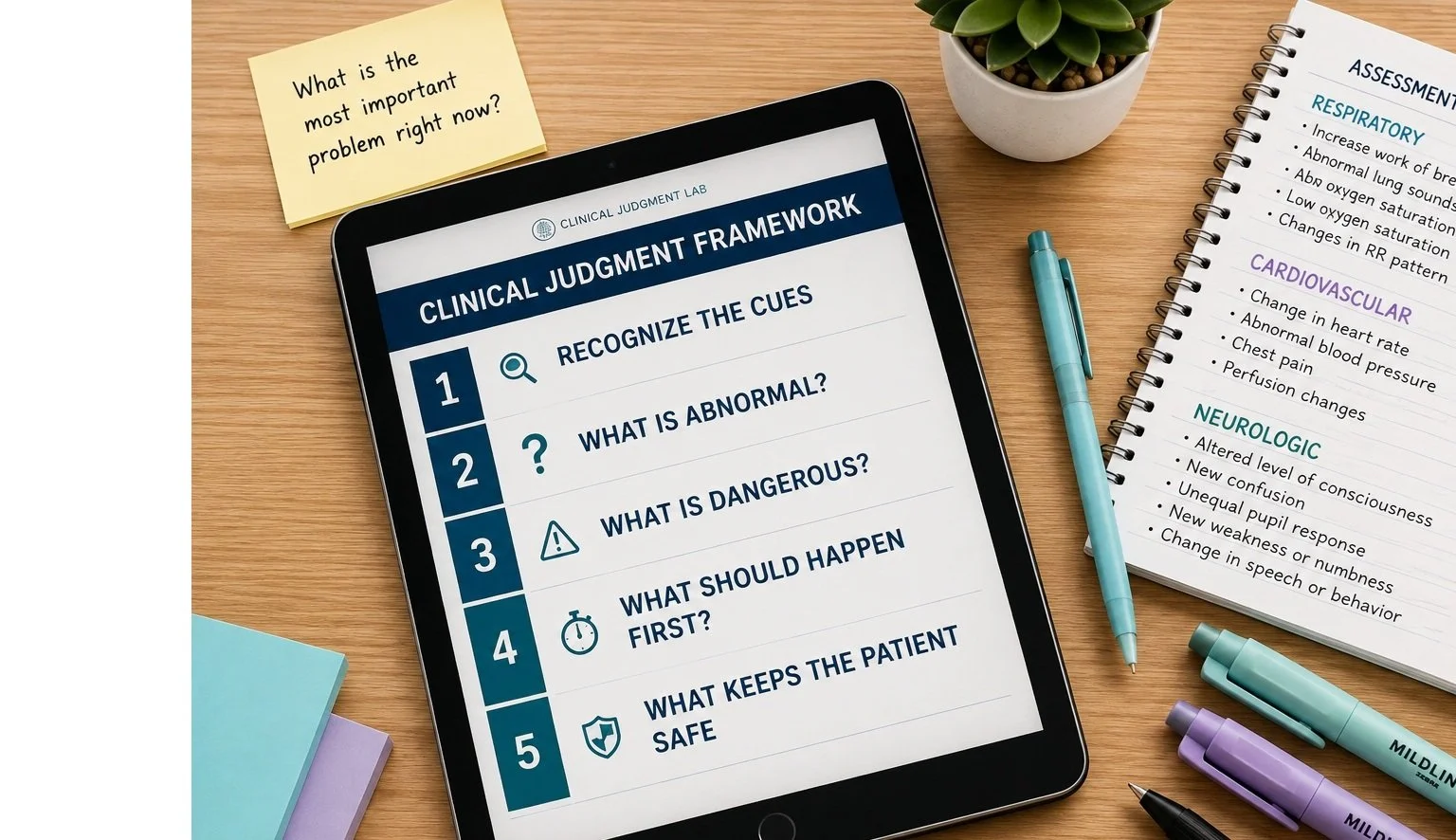
Clinical Judgment Is More Than Knowing the Right Answer.
It's knowing what matters most, recognizing when something is wrong, and understanding what should happen next.
How Clinical Judgment Works
01 RECOGNIZE THE CUES
What information stands out?
Assessment findings, symptoms, vital signs, lab values, medications, and changes from baseline all provide important clues.
02 WHAT IS ABNORMAL?
What doesn't fit the expected picture?
Identify findings that are new, unexpected, different from baseline, worsening, or not responding to treatment.
03 WHAT IS DANGEROUS?
Which finding presents the greatest threat?
Not every abnormal finding is equally urgent. Determine which cue poses the greatest risk to the patient.
04 WHAT SHOULD HAPPEN FIRST?
What requires immediate nursing attention?
Prioritize the action that addresses the most urgent threat and supports the patient's immediate needs.
05 WHAT KEEPS THE PATIENT SAFE?
What needs to happen next?
Intervene, reassess, monitor trends, review additional data, and escalate concerns when needed.
Build Your Clinical Judgment Skills
Practical nursing resources designed to help you recognize what matters, identify priorities, and understand what should happen next.
CLINICAL THINKING
Learn to connect assessment findings, medications, labs, and changes in patient condition.
PRIORITIZATION
Practice identifying what is abnormal, what is dangerous, and what requires attention first.
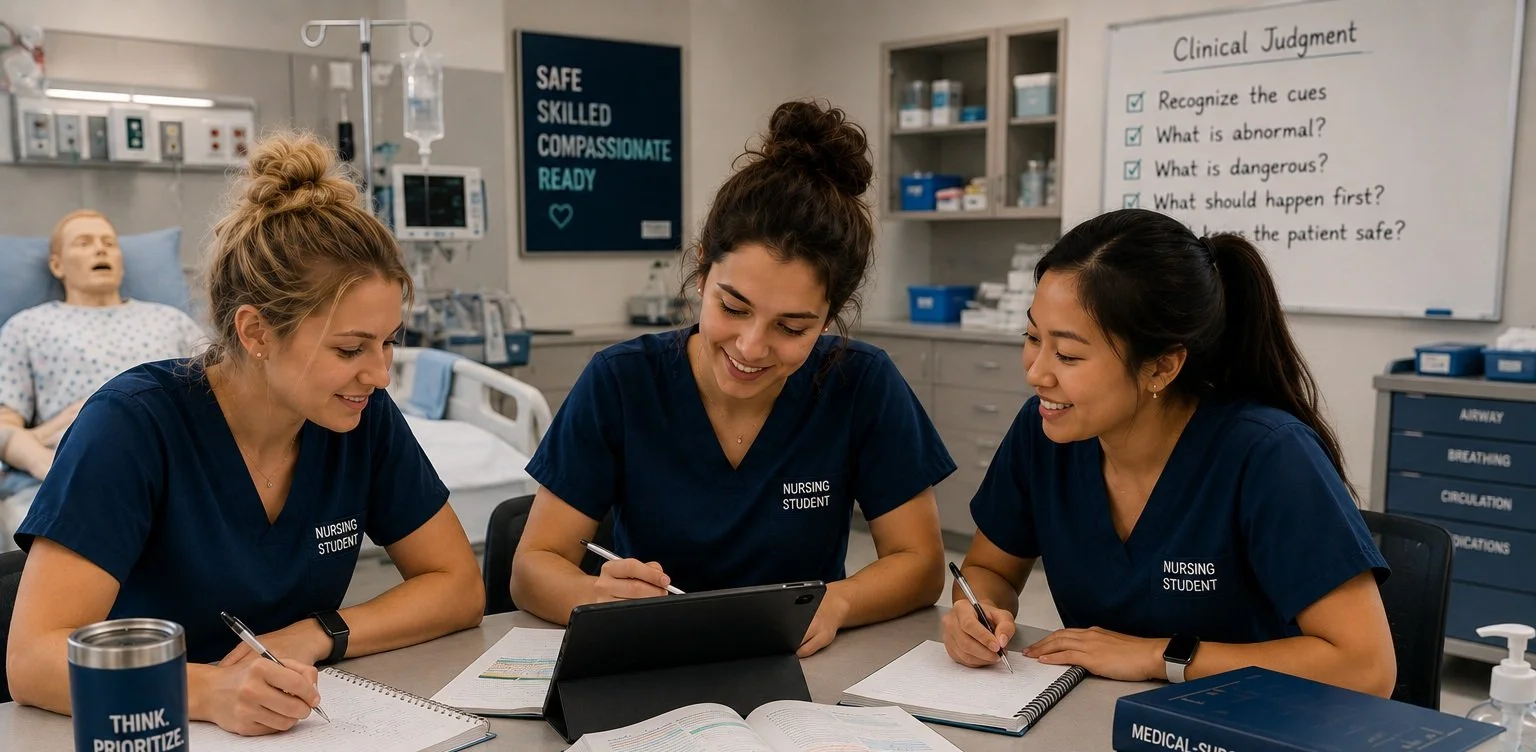
NURSING RESOURCES
Explore practical guides and tools designed for class, clinical, and exam preparation.
The Clinical Judgment Difference
Don't Just Memorize the Answer. Understand Why It's the Priority.
Clinical Judgment Lab resources are designed to help you connect what you know to the nursing decisions you need to make.
FROM KNOWING → TO THINKING
Knowing facts is important. Clinical judgment means recognizing which information matters, identifying what is abnormal, and determining what requires your attention first.
FROM ANSWERING → TO REASONING
Instead of simply memorizing the “right” answer, learn to work through the patient’s clinical picture and understand why one nursing action takes priority over another.